
WhatsApp for Travel Agents: How to Automate Bookings, Itineraries and Client Follow-Ups
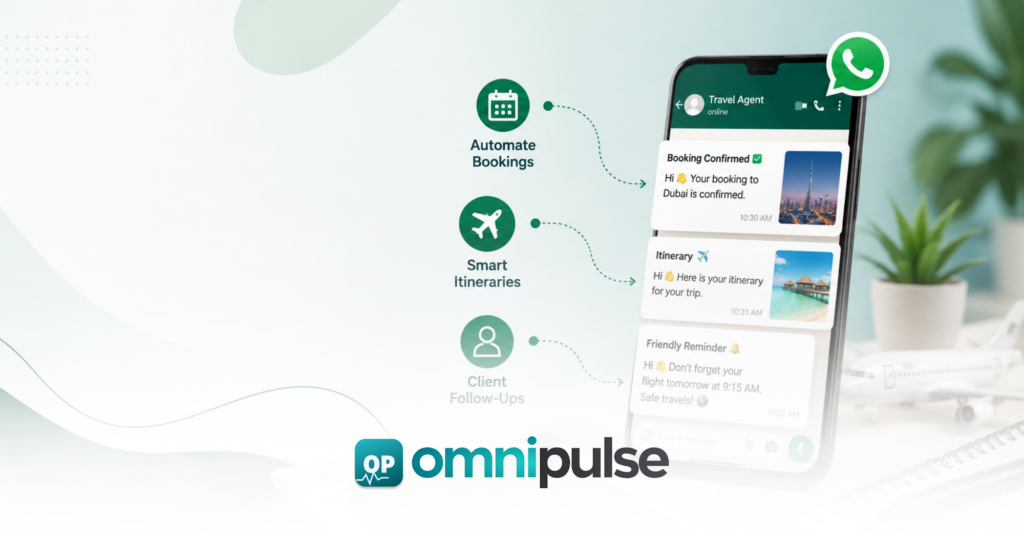
WhatsApp for travel agents refers to the use of the WhatsApp Business API by travel agencies, tour operators, and independent travel consultants to automate client communication across the entire booking journey, from initial inquiry through booking confirmation, pre-departure updates, in-destination support, and post-trip follow-up. It operates through a multi-agent shared inbox connected to the WhatsApp Business API, allowing the entire travel team to manage client conversations simultaneously from one dashboard with full conversation history. WhatsApp for travel agents is distinct from agents messaging clients from personal phones, which creates data governance problems, has no shared visibility, and collapses when the agent is unavailable. For most agencies, WhatsApp for travel agents starts with one shared place for every enquiry. This guide covers six things: why WhatsApp has become the primary communication channel for travel clients in the UAE, South Asia, and across the Middle East, the eight specific workflows travel agencies automate on WhatsApp in 2026, how to handle the quote-to-booking journey entirely inside WhatsApp, what a travel agency looks like before and after WhatsApp automation, compliance rules that apply to travel communication on WhatsApp, and a step-by-step setup process for any agency regardless of size. WhatsApp for travel agents also helps staff pick up a conversation without asking the client to repeat themselves. Why Do Travel Clients in the UAE and South Asia Prefer WhatsApp Over Email? WhatsApp messages achieve a 98% open rate compared to 20% to 25% for traditional email. Travel bookings inherently involve complex, time-sensitive communications including flight details, hotel addresses, tour pickup times, and visa requirements. When relying on email, travelers consistently miss critical pre-departure updates and schedule updates due to cluttered inboxes or spam filters. WhatsApp reaches clients instantly on their primary messaging device, virtually guaranteeing that important trip details are seen in real time. Teams using WhatsApp for travel agents can see who owns each booking at a glance. Keep these points in mind when reviewing WhatsApp for travel agents for your own situation. Furthermore, speed to response is the single largest factor in converting travel inquiries. Agencies that fail to offer chat-first booking paths lose high-intent leads to faster, tech-enabled competitors. Travelers in 2026 expect conversational booking, instant answers, and real-time confirmations. A WhatsApp travel inquiry that receives a response in under 60 seconds converts at a dramatically higher rate than one answered hours later via email. Across competitive markets in the Middle East and South Asia, the fastest responder consistently closes the booking. With WhatsApp for travel agents, quotes and itineraries stay attached to the right client thread. What Are the Eight WhatsApp Workflows Every Travel Agency Should Automate? How Do Travel Agencies Automate Inquiry Capture on WhatsApp? When a prospect messages an agency’s WhatsApp number, an automated flow captures key parameters such as destination, preferred travel dates, passenger count, and budget limits before a human agent steps in. The system logs the inquiry, tags it by destination, and routes it to the agent specializing in that specific region or service. Many agencies find WhatsApp for travel agents easiest to adopt when they start with one destination team. How Do Travel Agencies Send Quotes and Packages on WhatsApp? Agents deliver structured package proposals as cleanly formatted WhatsApp messages containing pricing, inclusions, hotel options, and validity deadlines. As a best practice, automated quote flows must include disclaimer triggers like “price valid until,” “subject to availability,” and “final confirmation after payment” to prevent binding commitments before supplier confirmation. Setting up WhatsApp for travel agents is a good first step before adding automation. A clear view of WhatsApp for travel agents makes the next decision easier. How Do Travel Agencies Handle Booking Confirmations on WhatsApp? Once payment is verified, an automated trigger delivers a full booking summary inside the existing WhatsApp thread. Flight numbers, hotel check-in details, transfer pickup times, and emergency contacts are compiled in a single message. This ensures the traveler keeps all critical booking records accessible in one continuous thread without hunting through PDF attachments. A clear routing rule makes WhatsApp for travel agents far more effective during peak travel seasons. How Do Travel Agencies Automate Document Collection on WhatsApp? Agencies collect passport copies, visa grants, and travel insurance documents directly within the chat interface. Clients upload files or photos straight from their phones, eliminating friction and lost email attachments. When submission deadlines approach, automated document collection reminders prompt the traveler to complete missing uploads. Reply templates inside WhatsApp for travel agents save time on repetitive visa and transfer questions. Teams that understand WhatsApp for travel agents early avoid most avoidable delays. How Do Travel Agencies Send Pre-Departure Reminders on WhatsApp? A three-touch automated pre-departure sequence keeps travelers prepared without manual agent intervention: Good reporting shows whether WhatsApp for travel agents is actually shortening response times. How Do Travel Agencies Provide In-Destination Support on WhatsApp? During the trip, travelers can message the agency for on-the-ground support, such as local transport questions, tour adjustments, or itinerary updates. Connecting WhatsApp to a multi-agent unified inbox for business ensures any available team member can respond with full context, maintaining continuous service quality even if the primary booking agent is off duty. Consistent tagging keeps WhatsApp for travel agents organised as enquiries grow. How Do Travel Agencies Send Post-Trip Follow-Ups on WhatsApp? Between 48 and 72 hours after the return date, an automated flow triggers to request trip feedback, prompt a Google review, and inquire about upcoming travel plans. Because travelers maintain an active, familiar WhatsApp thread with the agency, post-trip WhatsApp messages yield substantially higher response rates than traditional post-trip email surveys. Staff training matters just as much as the tool when rolling out WhatsApp for travel agents. How Do Travel Agencies Run Promotional Broadcasts on WhatsApp? Agencies send targeted, Meta-approved broadcast templates to opted-in client segments to promote seasonal packages, last-minute flight deals, or holiday specials. Maintaining a 98% open rate, these broadcasts yield significantly higher engagement and booking conversion rates than email marketing campaigns targeted at the same audience lists. Clients respond well when WhatsApp for travel agents delivers
WhatsApp Shared Inbox: How Teams Manage Customer Messages at Scale
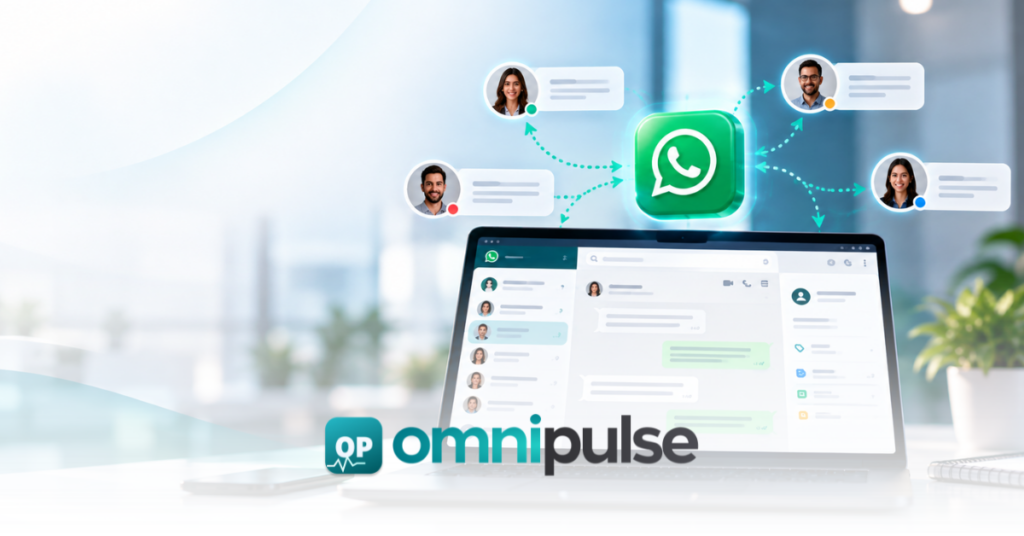
Your WhatsApp number is getting more messages, so you add another employee. Then another. Suddenly two agents answer the same customer, important chats sit unanswered, and nobody knows who owns what. A shared inbox turns that chaotic shared number into a structured team workspace where conversations can be assigned, tracked, and handled with full customer context. What Is a WhatsApp Shared Inbox? At its core, a shared inbox allows: A proper shared inbox is more than simply giving employees access to the same messages; current platforms increasingly emphasize ownership, assignment, history, and collaboration as the meaningful distinctions that separate a chaotic phone app from a true operational workspace. Why the WhatsApp Business App Stops Working for Growing Teams As your customer volume scales, the standard WhatsApp Business app introduces operational bottlenecks that threaten your customer relationships: The current SERP strongly emphasizes these operational shortcomings, proving that modern teams require more than basic multi-agent access to stay efficient. How a WhatsApp Shared Inbox Works To understand how a team workspace operates, follow this five-step workflow: Step 1: Customer sends a WhatsApp message ↓ Step 2: Message enters the shared workspace ↓ Step 3: Conversation is assigned (Manual or rule-based) ↓ Step 4: Agent responds with full context ↓ Step 5: Conversation is tracked until resolution 8 Features to Look for in a WhatsApp Shared Inbox When evaluating solutions, look for the core capabilities that turn messaging apps into scalable customer service channels: WhatsApp Shared Inbox vs. WhatsApp Business App WhatsApp Business App WhatsApp Shared Inbox Designed primarily for personal/small business messaging Designed for collaborative team operations Basic conversation management Advanced assignment and ownership Limited team coordination Robust multi-agent workflows Limited operational visibility Comprehensive reporting and performance tracking Manual handoffs Structured, rule-based routing Basic template replies Powerful automation + multi-step workflows Customer history is hard to operationalize Centralized, persistent conversation context Important Nuance: When comparing tools, verify device limits and linking parameters against official Meta documentation at the time of your deployment. When Should Your Business Move to a WhatsApp Shared Inbox? Self-qualify your need for a shared inbox by looking for these operational triggers: WhatsApp Shared Inbox Use Cases WhatsApp Shared Inbox + Automation A shared inbox shouldn’t exist in a vacuum. By combining team workflows with automation, you create a scalable engine: WhatsApp Message → AI/Automation Identifies Intent → Routed to Appropriate Team → Agent Receives Full Context → Agent Responds → Follow-up Automation → Conversation Resolved This workflow connects naturally with broader AI-powered customer communication strategies. WhatsApp Shared Inbox + CRM Your inbox becomes exponentially more valuable when customer data isn’t locked away in a silo. By tying your messaging workspace directly to your database, every chat links directly to a rich customer profile: WhatsApp⟶CRM⟶Customer Profile⟶Assignment⟶Follow-up How to Choose the Right Shared Inbox Before selecting a software vendor, run through this practical buyer checklist: How Omnipulse Turns WhatsApp Into a Team Workspace Rather than treating WhatsApp as an isolated app on shared mobile devices, Omnipulse unifies your communication infrastructure: Ready to eliminate inbox chaos? Learn more about streamlining your communication stack by exploring our guide on consolidating your customer communication stack. Review our technical breakdown on WhatsApp Business API setup. Frequently Asked Questions What is a Shared Inbox? A WhatsApp shared inbox is a collaborative software workspace that allows multiple team members to manage, assign, and respond to customer messages sent to a single business WhatsApp number. Can multiple agents use one WhatsApp number? Yes. Using official API-backed platforms, teams can authorize numerous agents to send and receive messages from the same business phone number simultaneously without sharing login credentials or devices. What is the difference between a shared inbox and WhatsApp Business? The standard WhatsApp Business app is built for single users on mobile devices. A WhatsApp shared inbox is built for teams, adding features like user assignment, internal notes, collision prevention, analytics, and CRM integrations. Do I need the WhatsApp Business API for a shared inbox? Yes. Scalable shared inbox solutions require the official WhatsApp Business API to securely connect a single phone number to multiple user accounts and backend software. How does a shared inbox assign conversations? Conversations can be assigned manually by managers or automatically routed based on keywords, team queues, agent skills, or customer tags. Can a shared inbox integrate with a CRM? Yes. Modern platforms allow you to sync WhatsApp chats directly with your CRM, attaching conversation history to existing customer contact profiles. Can AI and human agents work together in a shared inbox? Absolutely. AI bots can handle initial triage, answer routine FAQs, and qualify leads before seamlessly transferring the live conversation over to a human agent with full context. See how Omnipulse can automate this workflow for your team.
Healthcare Communication Automation: 8 Patient Workflows to Automate
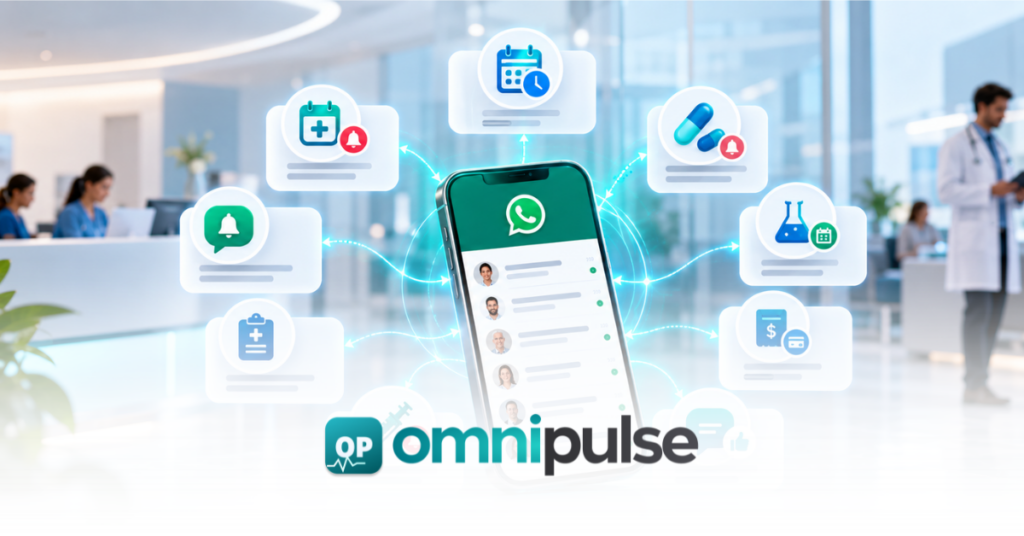
A clinic can easily spend hundreds of staff hours every week answering questions that do not require an ounce of clinical expertise: When reception desks are flooded with these routine logistics, patient satisfaction drops, wait times rise, and administrative burnout sets in. The goal of modern healthcare technology is not to automate the doctor it is to automate the communication surrounding the care journey. By introducing healthcare communication automation, clinics can connect the patient, communication channels (like WhatsApp, SMS, and voice), automated workflows, and internal support teams into a seamless continuum: Patient WhatsApp / SMS / Voice Automation Layer Internal Team Appointment & Care Journey What Is Healthcare Communication Automation? Healthcare communication automation uses software to automatically send, receive, route, or trigger patient communications based on predefined events or workflows. Healthcare communication automation can handle routine messages so staff focus on patient care. Examples include: Crucial Distinction: Automation is not autonomous clinical care. This article focuses strictly on administrative and communication workflows, leaving diagnosis, treatment planning, and clinical decisions entirely in the hands of qualified medical professionals. Keep these points in mind when reviewing healthcare communication automation for your own situation. Why Clinics Automate Patient Communication Clinic leaders invest in automation to solve five distinct operational bottlenecks: 8 Healthcare Communication Workflows You Can Automate 1. Appointment Booking Manual booking phone calls create bottlenecks and friction. Automation can handle the initial intake by guiding patients from an online enquiry or WhatsApp prompt to available services and doctors, letting them select a slot, and instantly confirming the reservation. Clinics using healthcare communication automation often see fewer missed appointments. 2. Appointment Confirmations Once an appointment is booked inside your system, an automated confirmation message should immediately dispatch. This gives the patient peace of mind and provides a digital paper trail containing: 3. Appointment Reminders No-shows are expensive and disrupt clinic efficiency. Automated reminder sequences reduce missed slots significantly: 4. Rescheduling & Cancellation Patients shouldn’t have to wait on hold just to change an appointment time. Automation can recognize a rescheduling request, present approved alternative slots, update your booking system automatically, and send a fresh confirmation. If a request falls outside standard parameters, the system instantly routes the thread to a human coordinator. A clear view of healthcare communication automation makes the next decision easier. 5. Routine Patient FAQs Front-desk staff spend a massive portion of their day answering repetitive operational questions. An automated engine can instantly resolve queries regarding: Good healthcare communication automation sends the right message at the right time without feeling robotic. 6. Pre-Visit Communication Ensure patients arrive prepared by triggering automated pre-visit sequences. These can deliver check-in instructions, digital intake forms, required identification checklists, and directional guides. 7. Post-Visit Follow-Up Administrative follow-ups help clinics maintain high service standards without increasing staff workload. Automated post-visit workflows can handle: Warning: Never use automated messaging as a substitute for professional clinician follow-up regarding test results or medical evaluations. 8. Human Escalation The most critical part of any healthcare automation framework is knowing when to step aside. Automation must actively monitor sentiment and keywords to recognize when a patient requires a human touch. Healthcare communication automation works best when reminders and follow-ups share one clear workflow. Teams that understand healthcare communication automation early avoid most avoidable delays. Patient Message │ ▼ Automation Layer (Routine Request)──► Resolved Automatically Patients respond better to healthcare communication automation when messages are short and specific. │ (Complex / Sensitive / Urgent) ▼ Human Support Team Healthcare communication automation also helps clinics keep records of every patient conversation. This principle is vital to omnichannel safety, ensuring vulnerable or distressed patients are never trapped in an automated loop. Where Healthcare Automation Should Stop Trust is the ultimate currency in healthcare. Clinics must establish clear, unyielding boundaries around what software is permitted to handle. Automate These (Administrative) Leave to Humans (Clinical) • Appointment scheduling & booking • Medical diagnosis & pathology interpretation • Confirmations & multi-channel reminders • Clinical treatment plans & medical advice • Routine operational FAQs & directions • Urgent or emergency clinical concerns • Status updates & intake paperwork • Complex patient-specific medical questions • Feedback collection & surveys • Sensitive clinical or emotional conversations It is also vital to distinguish between clinical communication platforms which coordinate internal hospital workflows, EHR paging, and on-call physician routing like those reviewed in PerfectServe’s clinical communication software guide and patient-facing communication automation. Omnipulse focuses strictly on the latter: streamlining the front-end administrative logistics between the clinic and the patient. WhatsApp, SMS, or Voice: Which Channel Should Clinics Use? Different patients prefer different communication channels. A robust system unifies them all. Before rollout, test healthcare communication automation with a small group of patients. Review healthcare communication automation against your own requirements before you commit. The Unified Approach: The specific channel matters less than whether your communications live in a unified customer experience platform. Omnipulse brings WhatsApp, SMS, email, and voice together into a single shared inbox so patient history is never fragmented across departments. How Healthcare Communication Automation Works Patient │ ▼ Healthcare communication automation should always route urgent questions to a human staff member. WhatsApp / SMS / Voice │ ▼ Omnipulse Unified Platform Measuring response rates shows whether healthcare communication automation is working. │ ▼ Automation Flow Engine │ A well designed healthcare communication automation plan respects patient consent and privacy. ▼ Healthcare / CRM / Booking System │ ├─► Automated Patient Confirmation Clinic managers often start with healthcare communication automation for appointment reminders. └─► Human Escalation (When Required) By connecting external triggers through robust REST API capabilities, clinics can sync their custom databases, electronic medical record (EMR) systems, and booking software directly into their communication workflows. Healthcare Automation Example: 50,000+ Patients Without More Support Staff To see how this works in practice, look at how ESMC transformed its operations. What to Look for in Healthcare Communication Software When evaluating solutions for your clinic, look for these essential capabilities:
Customer Communication Software: 9 Features to Evaluate Before You Buy
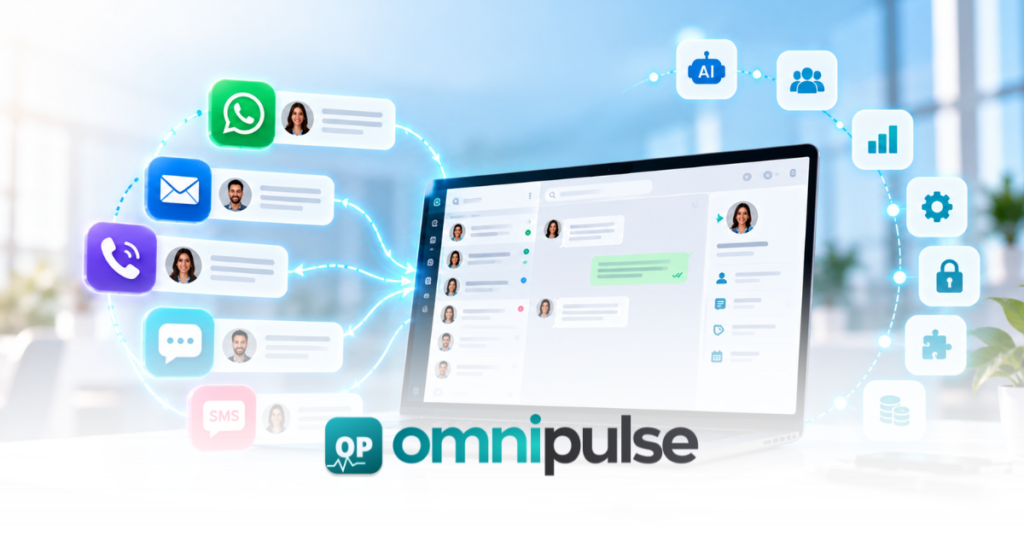
Picture a standard customer interaction cycle: A prospect messages on WhatsApp with a product question, transitions to an email with support, calls your sales line the next day, and finally checks out after receiving an automated SMS reminder. To the customer, this is one continuous, fluid conversation with your company. To your team, it looks like six completely disconnected systems. This tool sprawl is the fundamental buying problem facing modern businesses. Organizations aren’t just looking for another messaging channel; they are struggling to connect conversations, customer context, workflows, and outcomes without forcing their teams to constantly switch tabs. The best communication software isn’t the platform with the longest feature list, it’s the platform that brings order to this chaos. What Is Customer Communication Software? Communication software enables businesses to manage customer conversations and communication workflows across one or more channels, connecting those interactions directly with customer records, team workflows, and business systems. To evaluate these tools properly, it helps to separate them from adjacent software categories: When Does a Business Need Customer Communication Software? You’ve likely outgrown basic tools if your operations match these warning signs: 9 Features to Evaluate Before You Buy 1. Unified Customer Inbox Don’t just ask how many channels a platform supports. Ask: Can my team actually manage those channels from one single, frictionless operational workspace? Look for native support across WhatsApp, SMS, email, voice, and web chat all feeding into a single triage view. 2. One Customer Timeline A true communication platform stitches together cross-channel touchpoints. If a customer messages on WhatsApp, calls your support line, and later replies to an email, the agent shouldn’t have to manually reconstruct the story. History must be preserved and instantly digestible for any team member who picks up the thread. 3. Assignment & Routing A shared inbox is only as good as its governance rules. Look for robust routing capabilities, including manual assignment, automatic round-robin queues, skill-based routing, working-hour rules, and clean escalation paths to ensure every conversation has a clear owner. 4. Advanced Automation Move past simple “auto-replies.” Evaluate whether the platform supports visual workflow builders that can automatically capture intent, route conversations, update CRM fields, trigger internal notifications, and execute multi-step follow-ups based on customer behavior. 5. AI With Human Handoff In modern operations, AI shouldn’t just generate text it should execute workflows. Evaluate whether AI can accurately answer routine questions using approved business knowledge, qualify incoming leads, summarize long conversation threads, and seamlessly hand off to a human agent with the full context intact. 6. Integrations & API Your communication software must fit into your existing stack, not the other way around. Look for deep native integrations with your CRM, ecommerce platform, helpdesk, and payment gateways, alongside a robust REST API and webhooks for custom data syncing. 7. Analytics & Operational Visibility Avoid vanity metrics and focus on actionable operational intelligence: First response time, resolution time, conversation volume, automation rate, escalation rate, and agent workload distribution. 8. Security, Reliability & Governance Before your IT and security stakeholders sign off, evaluate granular access controls, user permissions, data handling protocols, encryption standards, and uptime SLAs to ensure enterprise-grade reliability. 9. Total Cost of Ownership (TCO) Never compare platforms based on monthly subscription prices alone. Calculate your true TCO by factoring in software license fees, individual channel/message costs, implementation time, agent training, and the administrative overhead saved by eliminating fragmented systems. To see how a rapid deployment impacts initial overhead, check out our 5-day omnichannel implementation roadmap. Customer Communication Software vs. CRM vs. Helpdesk vs. CPaaS Solution Primary Purpose CRM Storing customer and business relationship data Helpdesk Managing reactive support tickets and cases CPaaS Providing raw communication infrastructure and APIs Messaging Platform Sending and receiving messages in isolation Customer Communication Platform Unifying conversations, context, and team workflows You may not need to replace all these systems, but you do need to choose the right operational layer. If you are weighing a platform against raw APIs, read our detailed comparison on CPaaS vs. customer communication platforms. Build vs. Buy Ask yourself: Does your business need to build telecom and messaging infrastructure, or do you need to efficiently operate customer conversations? This challenge of tool fragmentation isn’t unique to customer communication. Across tech stacks from customer service to engineering teams consolidating computer vision pipelines into unified ecosystems like the Ultralytics Platform businesses are realizing that managing five distinct point solutions creates more overhead than value. How to Compare Customer Communication Platforms (Evaluation Matrix) Use this weighted starting framework and adjust the percentages based on your organization’s specific priorities: Questions to Ask a Customer Communication Software Vendor How Omnipulse Fits the Buyer Checklist Omnipulse brings customer conversations, channels, automation, and operational context into one intelligent workspace. Recommended FAQ What is customer communication software? It is software that centralizes customer conversations, channels, and team workflows into a single workspace connected to customer data. What features should customer communication software have? Key features include a unified inbox, cross-channel customer timelines, smart routing, automation, AI handoffs, robust integrations, and analytics. What is the difference between CRM and customer communication software? A CRM stores static business and customer records, while a communication platform manages active, real-time conversations. What is the difference between a helpdesk and a customer communication platform? A helpdesk focuses heavily on reactive ticketing, whereas a communication platform handles proactive engagement, sales, and multi-channel conversations. Does customer communication software include WhatsApp? Modern platforms natively integrate WhatsApp alongside SMS, email, voice, and web chat. Can customer communication software automate customer conversations? Yes, through visual workflow builders, trigger-based rules, and AI assistants. Does customer communication software integrate with CRM systems? Yes, top platforms offer deep native integrations with CRMs like Salesforce and HubSpot, plus custom APIs. How much does communication software cost? Pricing typically varies based on user seats, feature tiers, message volume, and channel add-ons. How do I choose communication software? Assess your channel needs, evaluate your team workflows, audit integration requirements, and calculate the total cost of ownership (TCO). Download the Buyer Checklist Evaluating platforms? Use
Customer Support KPIs: 7 Metrics Every Support Manager Must Track
What Are Customer Support KPIs and Why Do Most Teams Track the Wrong Ones? Customer support KPIs, or Key Performance Indicators, are the measurable metrics that evaluate how well a support operation is performing across three dimensions: customer satisfaction, operational efficiency, and cost. Most support teams track between 20 and 30 KPIs. Most teams also cannot name a single operational change they made last quarter based on that data. The problem is not a lack of measurement. It is measuring too many things and acting on none of them. High-performing support teams in 2026 track 8 to 12 core KPIs and review them weekly, not dozens reviewed once a quarter. This guide covers five things: the seven customer support KPIs that directly predict CSAT, churn, and cost, the 2026 benchmark for each metric, why deflection rate is a vanity metric that most teams should stop tracking, what a team tracking the wrong KPIs looks like versus one tracking the right ones, and a weekly KPI review process that takes under 30 minutes and produces actual operational changes. What Are the 7 Customer Support KPIs Every Manager Should Track Weekly? What Is CSAT and What Is a Good Benchmark in 2026? Customer Satisfaction (CSAT) measures short-term satisfaction with a specific support interaction; learn how to calculate CSAT scores accurately across channels. Review CSAT as part of your weekly customer support KPIs audit by ticket type and channel, rather than relying on monthly aggregate numbers. An overall CSAT of 78% can easily hide operational breakdowns in specific departments. What Is First Contact Resolution and What Is a Good FCR Benchmark? First Contact Resolution tracks the percentage of incoming customer issues resolved entirely within the initial contact, eliminating the need for follow-up. Among operational **customer support KPIs**, FCR is widely considered the single strongest indicator of customer satisfaction. What Is First Response Time and What Is a Good FRT Benchmark? First Response Time measures how long a customer waits from submitting a query until a human agent provides their initial reply. Ensure you evaluate FRT against channel-specific response time SLA targets when tracking customer support KPIs, rather than aggregating across all communication mediums. What Is Average Handle Time and What Is a Good AHT Benchmark? Average Handle Time (AHT) calculates the entire duration dedicated to resolving a single ticket, including talk time, chat duration, hold times, and post-conversation administration work. When analyzing customer support KPIs, a high handle time combined with high CSAT indicates an operational efficiency problem. High handle time combined with low CSAT indicates a resolution quality problem. What Is Customer Effort Score and Why Does It Predict Churn Better Than CSAT? Customer Effort Score (CES) evaluates how easy or difficult it was for a customer to get their issue resolved, scored on a 1-to-7 scale (ranging from “Very Easy” to “Very Difficult”). When tracking customer support KPIs, lower effort scores directly correlate with higher retention. CES is the strongest predictor of customer churn on individual support interactions slightly outperforming CSAT because customers vividly remember unnecessary friction even when the ultimate outcome was marked as satisfactory. What Is Cost Per Ticket and How Do You Calculate It? Cost Per Ticket quantifies total operational expenditures required to resolve a customer query. Tracking cost per ticket by channel highlights where automation investments yield the highest return on investment (ROI). What Is Resolution Rate and How Is It Different From Deflection Rate? Resolution Rate tracks the percentage of total incoming tickets successfully fixed, regardless of the number of touches required. Deflection rate merely counts contacts that never reached a human agent, assuming no response equals success. Resolution rate measures whether the customer’s problem was actually solved. A 70% deflection rate paired with a 45% resolution rate means over half of your “deflected” customers still have unresolved issues. What Is the Difference Between a Vanity KPI and an Actionable KPI? Most management frameworks list support metrics without distinguishing between operational signals and misleading vanity indicators. Tracking vanity customer support KPIs creates a false sense of efficiency while hiding systemic customer friction. Vanity KPI Actionable Replacement Why Deflection Rate Verified Resolution Rate + 72-Hour Recontact Rate Deflection counts customer frustration or giving up as a success metric. Total Ticket Volume Ticket Volume by Type & Channel Aggregate volume obscures structural product or service breakdowns. Average CSAT CSAT score by Ticket Type & Agent Averages mask extreme splits, such as 48% on return disputes vs. 91% on billing. First Response Time Average FRT by Channel against Channel-Specific SLA Email and WhatsApp operate on completely different expectations. Agent Utilisation Rate FCR Rate by Agent High utilization paired with low FCR indicates busy, inefficient interactions. What Does a Team Tracking the Wrong KPIs Look Like vs the Right Ones? Consider two teams of equal scale: 10 support agents handling 500 daily tickets. Operating Metric / Behavior Team A: Tracking Wrong KPIs Team B: Tracking Right KPIs Dashboard Focus 28 metrics reviewed monthly 7 core metrics reviewed weekly CSAT Visibility One aggregate monthly number Segmented by ticket type, channel, & agent weekly FCR Tracking Not tracked separately from response rate Tracked by ticket type with a 7-day recontact window Deflection Measurement Tracked as an absolute success metric Replaced with verified resolution rate Operational Changes 0 to 1 per quarter (based on gut feel) 4 to 6 per quarter (driven by metric trends) Overall CSAT Score 64% 81% Monthly Repeat Contacts 4,800 2,100 The Cost Impact Reducing monthly repeat contacts from 4,800 to 2,100 eliminates 2,700 unnecessary agent-handled interactions. At an industry benchmark of $13.50 per ticket (Gartner), this operational shift generates: These savings are realized entirely by tracking FCR at the ticket-type level and systematically fixing the root causes driving repeat contacts. How Do You Run a Weekly KPI Review in Under 30 Minutes? Frequently Asked Questions What are customer support KPIs? Customer support KPIs (Key Performance Indicators) are specific quantitative measures used to track the efficiency, quality, and financial performance of customer service teams. They evaluate critical areas
WhatsApp for Healthcare: How Clinics Automate Patient Communication in 2026

WhatsApp for healthcare refers to the use of the WhatsApp Business API documentation standards by clinics, hospitals, and diagnostic centers to automate patient communication workflows including appointment booking, reminder sequences, lab result delivery, prescription notifications, and post-visit follow-ups. It operates through the WhatsApp Business API connected to a multi-agent shared inbox, enabling clinical and administrative staff to manage patient conversations at scale without switching between tools. WhatsApp for healthcare is distinct from personal WhatsApp use by clinical staff, which carries data governance risks and is not appropriate for patient communication at the organizational level. This guide covers seven things: why patients prefer WhatsApp over phone and email for clinical communication, the financial cost of clinic no-shows and how WhatsApp automation addresses it, the eight specific workflows clinics automate on WhatsApp in 2026, a step-by-step setup process for any clinic regardless of size, the compliance rules that apply in different markets, what a clinic looks like before and after WhatsApp automation, and the unique per-workflow ROI calculation that no other guide provides. Key Takeaways Why Do Patients Prefer WhatsApp Over Phone and Email? Patients in the UAE, Pakistan, India, and across the Middle East already spend significant time on WhatsApp daily. Adopting WhatsApp for healthcare lets clinics reach patients on the same app they use to message family, requiring zero behavioral change. Unlike traditional phone calls, WhatsApp for healthcare accommodates asynchronous communication without requiring uninterrupted time. Emails require logging into a separate application and navigating a cluttered inbox. WhatsApp requires none of this. 82% of patients prefer it for this reason alone. WhatsApp messages achieve a 98% open rate with 88% read within 5 minutes. Email achieves 20% to 25% open rate. A clinic sending appointment confirmation via email reaches one in four patients reliably. The same message via WhatsApp reaches virtually all of them, almost immediately. Phone calls require both parties to be available simultaneously. WhatsApp allows asynchronous two-way communication. A patient can confirm, reschedule, or ask a question at any time. The clinic can respond without requiring a live call. This is particularly important for working patients who cannot take personal calls during business hours. Patients can share photos of prescription labels, upload insurance documents, or send a photo of a rash for triage purposes directly in the conversation. Clinics can share lab results as secure links, appointment summaries as formatted messages, and post-visit care instructions as documents. None of this is possible in a phone call. All of it is possible in a WhatsApp conversation with a fully logged audit trail. How Much Do Clinic No-Shows Cost and What Does WhatsApp Do About It? Patient no-shows cost the US healthcare system $150 billion annually. Each missed appointment costs the average clinic $200, making WhatsApp for healthcare reminders vital for revenue retention. For a clinic seeing 150 patients per week at a 20% no-show rate, that is 30 missed appointments per week at $200 each, totaling $6,000 per week and $312,000 per year in unrealized revenue. No-show rates average 15% to 25% for general outpatient appointments. Primary care and behavioral health sit higher at 20% to 35%. Source: KFF 2025 Healthcare Access and Utilization Survey. Clinic Performance Impact Patient no-shows cost the US healthcare system $150 billion annually, highlighting the need for WhatsApp for healthcare solutions. Each missed appointment costs the average clinic $200. WhatsApp appointment reminders reduce no-shows by 30% to 52%. WhatsApp appointment reminders reduce no-show rates by 30% to 52% compared to phone-only or no-reminder systems. According to a meta-analysis published in the Journal of Medical Internet Research in 2025, automated chatbot appointment reminders reduce missed appointments by 50.7% on average across healthcare settings. A 2025 National Institutes of Health study found automated text reminders reduce missed appointments by up to 28%, with patients 23% more likely to attend when reminded through automated systems. The ROI Calculation Clinic baseline: 150 weekly appointments, $180 average revenue per visit, 20% no-show rate = 30 missed appointments per week = $5,400 weekly revenue loss. Deploying WhatsApp for healthcare automation achieves a 40% no-show reduction: 30 missed appointments reduced to 18. 12 additional appointments recovered per week at $180 each = $2,160 per week recovered = $112,320 annual recovered revenue. Platform cost: $200 to $400 per month = $2,400 to $4,800 annually. Net annual ROI: $107,520 to $109,920. Payback period: under 2 weeks from deployment. What Are the Eight Patient Communication Workflows Clinics Automate? Clinics that succeed with WhatsApp for healthcare do not use it as a simple messaging channel. They automate specific, repeatable workflows that previously required manual staff involvement. These are the eight workflows with the highest volume and clearest automation ROI. How Do Clinics Automate Appointment Booking on WhatsApp? Patients send a WhatsApp message requesting an appointment. The automated flow asks for their preferred date, time, and department. It checks availability against the clinic’s scheduling system, confirms the slot, and sends a calendar-formatted confirmation message. When using WhatsApp for healthcare, no receptionist involvement is required for standard appointment booking. Staff are only involved when scheduling conflicts or clinical triage decisions are needed. WhatsApp appointment bookings confirm at 3.2 times the rate of email booking confirmations. How Do Appointment Reminder Sequences Work on WhatsApp? Within a WhatsApp for healthcare strategy, a three-touch reminder sequence delivers the highest no-show reduction. Touch 1 is a confirmation message sent immediately after booking with appointment details. Touch 2 is a reminder sent 48 hours before the appointment with a one-tap confirm or reschedule option. Touch 3 is a day-of reminder sent 2 hours before the appointment. Each message includes a direct reply option for rescheduling. Patients who can reschedule without calling are significantly more likely to rebook than to simply not attend. Three-touch SMS and WhatsApp sequences reduce no-show rates to 8% to 12%, down from a baseline of 15% to 25%. How Do Clinics Share Lab Results and Reports on WhatsApp? When lab results are ready, the WhatsApp for healthcare system sends an automated notification with a secure link to
Customer Support Knowledge Base: How to Build One Your AI Can Use
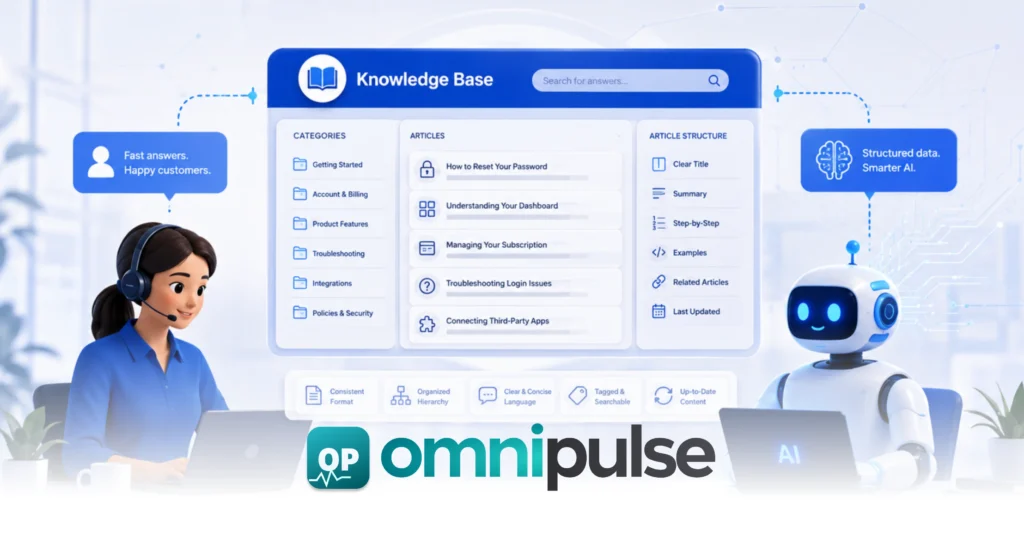
A customer support knowledge base is a structured, searchable repository of information that support agents and AI systems use to answer customer queries. It contains policy documents, product guides, troubleshooting steps, FAQs, and resolution templates, organized so that both a human agent mid-conversation and an AI copilot can retrieve the right answer in seconds. The quality of a knowledge base is the single biggest factor determining whether an AI copilot suggests accurate replies or generic ones. An AI connected to a complete, well-structured knowledge base achieves 80% to 90% accuracy on common query types. An AI connected to a sparse or outdated one gives answers that damage trust and generate repeat contacts. This guide covers six things: what a customer support knowledge base is and why it matters more in 2026 than ever before, the structure that makes a knowledge base usable by both agents and AI, the five most common knowledge base mistakes that break AI suggestion accuracy, how to build one from scratch in five steps, what a team without a knowledge base looks like versus one with a well-maintained one, and how to keep it current without it becoming a maintenance burden. Takeaways What Is a Customer Support Knowledge Base and Why Does It Matter in 2026? A customer support knowledge base serves as your company’s single source of truth. Historically, help centers were built purely for external customers to self-serve or for human agents to search manually during customer interactions. In 2026, the nature of customer service has shifted fundamentally. With 81% of consumers believing AI is essential according to recent AI customer service statistics, knowledge bases are no longer just passive libraries, they are active training materials for your AI copilots, generative models, and automated bots. When an AI customer service model processes a ticket, it relies on Retrieval-Augmented Generation (RAG) to scan your knowledge base for context. If your knowledge base is well-organized, accurate, and regularly updated, the AI generates hyper-specific, brand-aligned answers. If the knowledge base is chaotic, outdated, or stored in inaccessible formats, the AI will either refuse to answer or output inaccurate responses (“hallucinations”) that irritate customers and burden agents. An effective customer support knowledge base empowers your operations in three primary ways: What Structure Makes a Knowledge Base Usable by Agents and AI? Following best practices in an AI knowledge base guide, your knowledge base needs a clean, highly structured design so human representatives and AI algorithms can instantly parse content. Atomic Article Design for Your Customer Support Knowledge Base Keep articles focused on a single topic, resolution path, or question. Instead of creating a massive 3,000-word “Billing Guide,” break it down into atomic units like “How to Change Your Credit Card,” “Understanding Invoice Line Items,” and “How to Request a Refund.” AI vector search retrieves small, specific chunks of text much more effectively than long, multi-topic pages. Standardized Metadata and Taxonomy Tag every article with clear categorization (e.g., Category: Billing, Sub-category: Invoicing), explicit user intent keywords, target audience tags (internal vs. external), and lifecycle status. Metadata gives AI algorithms explicit signals regarding when and where an article applies. Clear Heading Hierarchy Use predictable semantic HTML headers (##, ###) to create logical separation. Generative AI systems rely on structured formatting to understand parent-child relationships between concepts (e.g., an H3 troubleshooting step beneath an H2 problem description). Actionable Resolution Templates For internal knowledge bases, include explicit response templates that an AI copilot can easily pull and customize. Format these with clear placeholders—like [Customer Name] or [Order ID]—so agents or AI models can adapt them cleanly. What Are the Five Knowledge Base Mistakes That Break AI Accuracy? Most organizations assume their existing help desk documentation is ready for AI deployment. However, standard human-centric writing frequently causes AI retrieval mechanisms to fail. Avoiding these five critical mistakes in your customer support knowledge base will protect your AI accuracy. Mistake 1: Writing Articles for Humans Only, Not for AI Retrieval Human readers automatically fill in context using intuition. For instance, if an article says, “Refer to the table above for regional pricing,” a human can scroll up. An AI vector retrieval system pulls isolated snippets of text; when it grabs a paragraph referencing “the table above,” it loses the essential context. Solution: Write every article using explicit, self-contained language. Avoid relative pointers like “as mentioned earlier,” “see below,” or ambiguous pronouns like “it” or “they.” Mistake 2: Storing Knowledge in PDFs or Attached Documents Many teams upload warranty policies, manuals, or terms of service as attached PDFs or Word documents within a help center page. Most AI copilots cannot efficiently index or parse deep content locked inside attachments. Solution: Convert all critical policy, product, and troubleshooting content into plain, indexed HTML text directly within your customer support knowledge base. Attachments should only serve as optional supplementary downloads for users. Mistake 3: Using Internal Jargon That Customers Do Not Use If a customer submits a ticket asking, “How do I get a human on the phone?”, but your internal customer support knowledge base article is titled “Escalation Protocols for L2 Phone Dispatch” the semantic vector match between the query and the article drops significantly. Solution: Title and write articles using the natural language, exact phrasing, and common terminology your customers actually use in their support requests. Mistake 4: Leaving Outdated Articles Live Without a Review Date An AI copilot ranks content based on semantic relevance, not creation date. If an old 2023 refund policy article matches a query better than a vague 2026 update, the AI will confidently suggest the outdated policy. Solution: Implement strict expiration metadata, mandatory 90-day review cycles, and immediate archiving protocols for retired products or deprecated processes. Mistake 5: Building the Knowledge Base After Deploying the AI Rolling out an AI copilot across your customer support inbox before building a clean, structured knowledge base inevitably results in poor AI suggestions. Agents quickly lose confidence in the AI assistant and turn it off entirely, creating organizational resistance that is difficult to
First Contact Resolution: Formula, Benchmarks and How to Improve FCR in 2026
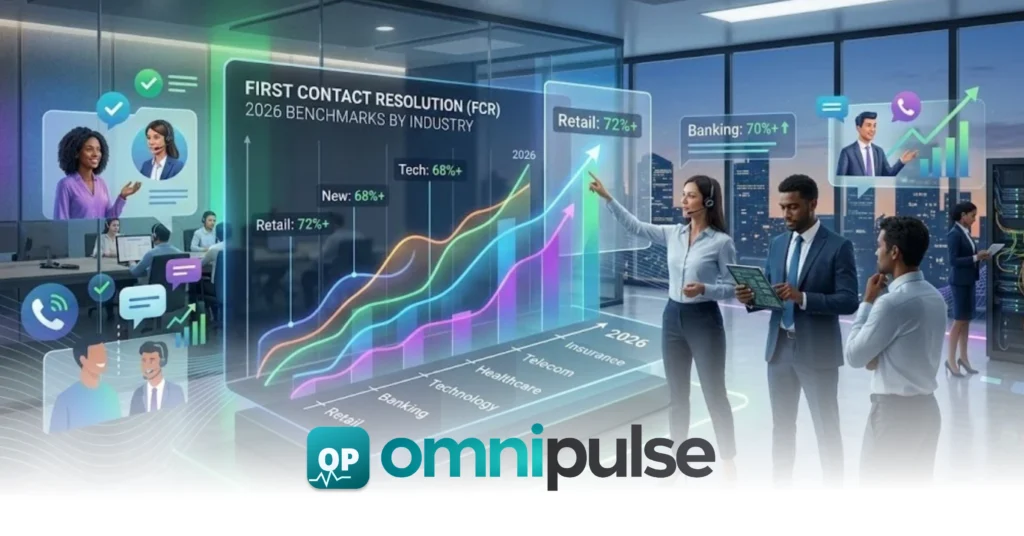
First contact resolution, or FCR, is the percentage of customer support issues that are fully resolved during the first interaction, without the customer needing to follow up a second time about the same problem. It is calculated using a simple formula: the number of issues resolved on first contact divided by the total number of issues handled, multiplied by 100. A team that resolves 800 out of 1,000 tickets without a follow-up has an FCR rate of 80%. The cross-industry average in 2026 sits at 70%, meaning three in ten customers leave their first support interaction without a resolution and have to contact the business again. This guide covers six things: how to calculate first contact resolution correctly, what the 2026 FCR benchmarks are by industry, why FCR is the single most important metric for predicting CSAT and retention, the five operational levers that move FCR, what a low-FCR team looks like versus a high-FCR one, and a step-by-step diagnosis process for finding exactly where your FCR is leaking. What Is First Contact Resolution and How Do You Calculate It? First contact resolution measures the percentage of support issues that are successfully resolved during the initial point of contact. To calculate FCR accurately, divide the total number of issues resolved on first contact by the total number of unique issues handled within a given period, then multiply by 100. For example, if a support team handles 1,000 tickets in a week and 750 of those tickets are fully resolved without requiring a second contact or follow-up from the customer, the FCR calculation is: FCR (%) = 750/1,000 * 100 = 75% The most common calculation mistake occurs when support teams confuse first response time with first contact resolution. Sending an automated or agent reply within 60 seconds counts toward a first response time SLA, but it only contributes to FCR if the customer’s issue is entirely resolved in that interaction and no further outreach is needed. Teams that mistake first response for first resolution consistently overstate their actual FCR rate by 15 to 25 percentage points. To maintain calculation accuracy, organizations use the 7-day window rule. The 7-day window is the standard measurement period established by SQM Group. If a customer initiates contact regarding the same issue within 7 days of the initial ticket closing, the original interaction is reclassified as an FCR failure regardless of how the agent tagged it upon ticket resolution. Key Benchmark Callout: The cross-industry average first contact resolution rate is 70% in 2026. World-class FCR starts at 80%. Only 5% of contact centers currently clear this threshold. What Is a Good First Contact Resolution Rate by Industry in 2026? FCR benchmarks vary significantly by industry because ticket complexity, regulatory constraints, and agent authority levels differ. Comparing your FCR against a cross-industry average provides limited operational insight, whereas sector-specific comparisons offer clear performance targets. What Is a Good FCR Rate for Retail and E-Commerce? Retail achieves the highest average FCR of any industry at 78%, according to Fullview benchmarking data cited in Ringly.io’s 2026 FCR analysis. General e-commerce benchmarks fall between 75% and 85%. Retail leads cross-industry metrics primarily due to ticket structure: order tracking, simple product inquiries, and return processing are clear, bounded tasks that agents can resolve within a single interaction using standard authority levels. What Is a Good FCR Rate for Technology and SaaS? IT help desks and SaaS support teams handle higher technical complexity than retail contact centers. Tickets resolved with integrated AI automation achieve a median resolution time of 4.4 hours versus 71 hours for fully manual tickets, according to industry research tracking IT help desk benchmarks. Target FCR benchmarks for B2B SaaS organizations range from 72% to 82% depending on system architecture and integration depth. What Is a Good FCR Rate for Telecom? Telecom consistently records the lowest FCR of any major industry, typically ranging between 60% and 68%. The primary driver is not agent performance but systemic issue structure. Complex billing disputes, network coverage adjustments, and hardware provisioning require asynchronous back-end system changes that cannot be completed in real time. SQM Group benchmarking attributes roughly 40% of telecom repeat contacts to back-office processing rules or system limitations rather than agent errors. What Is a Good FCR Rate for Healthcare and Financial Services? Healthcare and financial services organizations record average FCR benchmarks between 65% and 75%. These lower figures stem directly from strict compliance mandates, multi-factor identity verification protocols, and regulatory sign-offs required before agents can complete account actions. Any team operating within healthcare or financial services that sustains an FCR above 75% is delivering top-quartile performance. What Is World-Class FCR? World-class FCR begins at 80% across all sectors, according to SQM Group. Historically, fewer than 5% of contact centers achieved this mark. However, the deployment of hybrid support models combining generative AI for tier-1 issues with specialized human agents for complex escalations is enabling mid-market organizations to reach 80% FCR consistently. Why Is First Contact Resolution the Most Important Support Metric? Every 1% improvement in first contact resolution produces a direct 1% improvement in overall CSAT score, according to research by SQM Group. Conversely, every repeat contact a customer is forced to make regarding an unresolved issue drops their customer satisfaction score by 15%. This linear relationship exists because customers evaluate support quality based on effort expended. No other operational metric, including response time or average handle time, demonstrates a 1-to-1 impact on CSAT. FCR serves as the strongest operational predictor of customer retention and churn. According to Gartner research, 96% of customers who experience high-effort interactions, such as reaching out multiple times to solve a single issue, report feeling disloyal to the brand afterward. Resolving customer inquiries on the first attempt removes the friction that drives customers to evaluate alternative competitors. Key Impact Callout: Every 1% improvement in first contact resolution produces a 1% improvement in CSAT. Every repeat contact drops customer satisfaction by 15%. The cost impact of unresolved tickets is compounding and measurable. Gartner benchmarks
AI for Customer Support: How the 60% Rule Slashes Response Times and Reclaims 40 Weekly Hours

The modern support inbox is often a site of controlled, exhausting chaos. As customer inquiries pour in across email, SMS, social media DMs, and live chat, even the most dedicated teams find themselves buried under an avalanche of administrative overhead. When agents spend more time channel-hopping and manually routing tickets than utilizing AI for customer support to solve customer problems To break this cycle, organizations are turning to AI for customer support not as a futuristic, abstract concept, but as a highly structured, measurable framework for operational transformation. The Operational Reality: By implementing the 60% Rule, a structured 30-day methodology, support leaders can achieve a 60% reduction in average response times while reclaiming an estimated 40 hours of team labor per week. This isn’t an overnight miracle or a magic pill. Instead, it is the compounding result of eliminating manual routing delays, ending the era of fragmented “tool sprawl,” and automating the repetitive triage phase of the support lifecycle. For an in-depth look at how top-tier organizations are approaching this paradigm shift with AI for customer support, explore our comprehensive guide on Modern Customer Service Metrics. What is AI for Customer Support and how does it work? At its core, AI for customer support is the systematic integration of machine learning, Natural Language Processing (NLP), and Large Language Models (LLMs) into the helpdesk environment. The objective is simple: to unify communications and automate high-frequency, low-complexity tasks. Unlike traditional ticketing systems that rely on rigid, static rules or manual human assignment, an AI support platform functions as a centralized, intelligent “single pane of glass” for modern AI for customer support. To understand why this is a massive leap forward from legacy helpdesks, we have to look at how modern AI engines operate under the hood: The primary objective of this AI for customer support architecture is to eradicate fragmented tool friction. When your voice, chat, email, and billing data are consolidated into one AI-driven interface, your agents stop losing valuable minutes to “app swiping” and start gaining hours in actual resolution speed. To learn more about unifying your tech stack, check out our insights on Eliminating SaaS Tool Sprawl. How can AI for customer support reduce response times by 60%? The 60% Rule is an operational, directional framework built around a highly structured 30-day adoption curve. It recognizes that operational speed gains are not linear; instead, they compound as your team transitions from active manual work to strategic system oversight. When you eliminate tool-switching and automate the initial customer acknowledgement phase, efficiency gains multiply across your entire support ecosystem. Phase Timeframe Core Focus & Activities Operational Impact & Milestones The Setup Phase Weeks 1–2 Technical integration, mapping out historic support tickets, and connecting the AI to your internal knowledge base and communication channels. Initial speed gains are realized through the consolidation of channels, removing the immediate, exhausting delay of switching through AI for customer support. The Behavioral Shift Weeks 3–4 The AI engine begins to accurately categorize, tag, and suggest responses for 80% or more of all incoming queries. Agents stop “cherry-picking” easy tickets. They transition to handling high-complexity cases while the AI manages the routine, making the 60% reduction in response time a reality via AI for customer support. To see how this framework fits within a broader digital transformation strategy, refer to our detailed resource on Implementing Operational AI. Can AI for customer support really save a team 40 hours per week? To an operations manager, saving 40 hours a week might sound like an over-ambitious marketing claim. However, the math behind it is remarkably straightforward. Consider a modest support team of 10 agents not yet leveraging AI for customer support. In a standard, non-AI environment, agents waste significant portions of their day on administrative micro-tasks. Let’s break down where those hours are lost: 10 Agents x 48 Minutes/Day Lost (Administrative Friction) = 8 Hours/Day 8 Hours/Day x 5 Working Days/Week = 40 Hours Reclaimed/Week By introducing AI for customer support, you systematically target and eliminate these specific “silent killers” of team efficiency: Ultimately, reclaiming these 40 hours is the operational equivalent of adding an entire full-time support agent to your roster by utilizing AI for customer support, without any of the associated recruiting, onboarding, or overhead costs. To evaluate which specific software can help your organization unlock these savings, refer to the Best AI Tools for Customer Support Buyer’s Guide. What are the best strategies for implementing AI for customer support? To successfully roll out this technology and achieve the gains promised by the 60% Rule, Operations Managers must follow a highly practical, strategic playbook. 1. Consolidate Support Channels into a Single AI-Powered Pane Fragmentation is the ultimate enemy of support speed. When agents are forced to monitor email, SMS, and various social media channels in multiple browser tabs, communication gaps are inevitable without a unified AI for customer support strategy. By routing all incoming channels into a unified, AI-driven helpdesk, you guarantee that no customer inquiry slips through the cracks or languishes in an unmonitored channel. 2. Implement Intelligent Sentiment-Based Routing All customer issues are important, but some are genuinely critical. Advanced AI for customer support systems analyze the tone and vocabulary of incoming messages to detect urgency and frustration. If a customer is highly upset, the AI flags the ticket and routes it directly to a senior specialist or manager. This proactive escalation model protects your brand reputation and prevents critical issues from sitting in general queues. For a deep dive into customer retention strategies, review our guide on Maximizing Customer Lifetime Value. 3. Deploy AI-Driven Auto-Acknowledgements First impressions matter. A traditional auto-responder that says, “We have received your email and will respond within 24 hours” does little to ease customer anxiety. An intelligent, AI for customer support driven first response analyzes the customer’s specific problem and sends a contextual acknowledgement: “Hi Sarah, we see you’re having trouble accessing your billing dashboard. Our technical team is on it, and we will update you here shortly.”
Customer Experience Platform: 5 Massive Ways Tool Consolidation Saves Thousands

Imagine walking into a modern office and watching a customer support agent work. They open a tab for email. They open a second tab for WhatsApp. A third flashes for SMS, a fourth rings for a voice call, and a fifth tracks internal notes. This is the “Tab Habit,” and it is quietly killing your bottom line. Research shows that context switching the act of jumping between disconnected apps can drain up to 40% of an employee’s daily productivity. When your team spends more time managing software than helping humans, you aren’t just losing time. You are paying a hidden, compounding fee on your operational budget. We call this the Silo Tax. To break free from this cycle, growth-minded companies are moving away from fragmented software ecosystems. They are turning to a unified Customer Experience Platform to streamline workflows, protect their profit margins, and rescue their teams from terminal burnout. Omnipulse was built by people who grew completely exhausted by bad, siloed tools. We designed it as a single, centralized command center that replaces chaos with clarity, paying for itself through sheer operational efficiency. What is a customer experience platform and why does it matter? A modern customer experience platform is far more than an aggregation of communication channels. Think of it as an operational command center for your entire customer-facing business. Historically, companies adopted a reactionary approach to software. They bought one tool for email, added another for the WhatsApp Business API, tacked on an SMS provider, and integrated a legacy voice solution. The result? A fragmented tech stack where data lives in isolated pockets. [Legacy Setup]: SMS Tab + WhatsApp Tab + Email Tab + Voice Tab = Divided Context VS. [Omnipulse Setup]: Unified Timeline -> Single Command Center -> Complete Context A true customer experience platform fundamentally shifts this dynamic. It converges every single touchpoint into a single, unified timeline. Whether a customer reaches out via text on the streets of Nairobi, sends a WhatsApp message in Sharjah, or places a voice call from London, the conversation flows into one stream. This consolidation matters because customers no longer view their interactions with you through the lens of individual departments. They expect a seamless, continuous conversation. When your software reflects that expectation, your business gains an immediate competitive advantage. How does a customer experience platform reduce operational overhead? The most immediate impact of deploying an enterprise-grade customer experience platform is the elimination of software redundancy. Let’s run an audit on the typical “Silo Tax” paid by a scaling business managing a fractured stack. The Silo Tax Audit When you rely on separate tools, your monthly software invoice looks something like this: That totals $200 per agent, every single month, spread across five different vendors, five separate contracts, and five points of failure. By migrating to a consolidated customer experience platform, you compress those five subscriptions into a single unified workspace, often slashing your direct software licensing costs by half. Eliminating the “Falling Through the Cracks” Tax Beyond the software bills, fragmented tools introduce massive operational risk. When channels are siloed, messages inevitably get missed. An agent might resolve an email ticket without realizing the same customer left an urgent, angry message on WhatsApp ten minutes prior. A Unified Inbox eliminates this blindness. Because every channel feeds into a centralized interface, tickets cannot vanish into the ether. Fragmented Tools: [Email] [WhatsApp] [SMS] -> High Risk of Missed Messages Unified Inbox: [Incoming Channels] —> [Single Stream] -> Zero Missed Messages This structural clarity yields massive dividends. Consider Aeroworld, an industry leader that faced crippled response times due to tool fragmentation. After consolidating their entire communication stack into Omnipulse, they achieved a staggering 60% drop in team response times within the very first month. They didn’t hire more staff; they simply removed the friction caused by their software. Why is tool consolidation important for business growth? To scale a business effectively, you must decouple revenue growth from headcount growth. If your operations require you to hire a new support agent for every X number of new customers, your business model isn’t truly scaling—it’s just expanding its overhead. Traditional Growth: More Customers = More Staff = Linear Overhead Cost Consolidated Growth: More Customers + Omnipulse = Static Staff = Exponential Profit Tool consolidation allows your existing team to handle a significantly higher volume of interactions without compromising quality. By removing the friction of app-switching, you unlock hidden capacity within your workforce. A clear example of this can be seen at the Erum Saba Medical Center. Managing multi-channel patient communications across various platforms was draining hours of administrative time every single day. By moving their entire operation over to a unified customer experience platform, they successfully saved 40 hours weekly. That is the equivalent of adding a full-time employee to their staff, completely free of charge, simply by optimizing their digital workspace. Furthermore, a consolidated architecture ensures global operational resilience. Omnipulse was built from the ground up to handle complex, regional communication networks. A platform engineered to handle infrastructure demands across Sharjah and Nairobi is more than resilient enough to power enterprises in London and across the globe. True consolidation gives you the infrastructure to grow anywhere, anytime. Can a customer experience platform improve agent productivity? When agents are forced to use poorly optimized tools, performance drops and burnout skyrockets. A customer experience platform fundamentally alters the day-to-day agent experience by automating administrative busywork. Through Smart Assignment engines and customizable Automation Flows, incoming messages are instantly routed to the best-equipped agent based on language, channel, or past interaction history. Agents no longer waste time manually cherry-picking tickets or passing customers back and forth across departments. Feature Fragmented Stack Problems Omnipulse Solution Routing Manual triage, delayed handoffs, lost tickets Smart Assignment engine routes instantly Context Blind agents, repeating questions, frustrated users Full Conversation History on one screen Workflow Constant app-switching, high cognitive load Continuous Unified Inbox workspace The greatest benefit of an integrated customer experience platform, however, is the preservation of