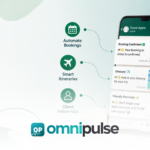
Imagine walking into a modern office and watching a customer support agent work. They open a tab for email. They open a second tab for WhatsApp. A third flashes for SMS, a fourth rings for a voice call, and a fifth tracks internal notes.
This is the “Tab Habit,” and it is quietly killing your bottom line. Research shows that context switching the act of jumping between disconnected apps can drain up to 40% of an employee’s daily productivity.
When your team spends more time managing software than helping humans, you aren’t just losing time. You are paying a hidden, compounding fee on your operational budget. We call this the Silo Tax.
To break free from this cycle, growth-minded companies are moving away from fragmented software ecosystems. They are turning to a unified Customer Experience Platform to streamline workflows, protect their profit margins, and rescue their teams from terminal burnout.
Omnipulse was built by people who grew completely exhausted by bad, siloed tools. We designed it as a single, centralized command center that replaces chaos with clarity, paying for itself through sheer operational efficiency.
Table of Contents
What is a customer experience platform and why does it matter?
A modern customer experience platform is far more than an aggregation of communication channels. Think of it as an operational command center for your entire customer-facing business.
Historically, companies adopted a reactionary approach to software. They bought one tool for email, added another for the WhatsApp Business API, tacked on an SMS provider, and integrated a legacy voice solution. The result? A fragmented tech stack where data lives in isolated pockets.
[Legacy Setup]: SMS Tab + WhatsApp Tab + Email Tab + Voice Tab = Divided Context
VS.
[Omnipulse Setup]: Unified Timeline -> Single Command Center -> Complete Context
A true customer experience platform fundamentally shifts this dynamic. It converges every single touchpoint into a single, unified timeline. Whether a customer reaches out via text on the streets of Nairobi, sends a WhatsApp message in Sharjah, or places a voice call from London, the conversation flows into one stream.
This consolidation matters because customers no longer view their interactions with you through the lens of individual departments. They expect a seamless, continuous conversation. When your software reflects that expectation, your business gains an immediate competitive advantage.
How does a customer experience platform reduce operational overhead?
The most immediate impact of deploying an enterprise-grade customer experience platform is the elimination of software redundancy. Let’s run an audit on the typical “Silo Tax” paid by a scaling business managing a fractured stack.
The Silo Tax Audit
When you rely on separate tools, your monthly software invoice looks something like this:
- Dedicated Email Ticketing System: $60/agent/month
- Standalone WhatsApp Business Gateway: $45/agent/month
- Bulk SMS Platform Subscription: $30/agent/month
- Cloud Voice & Telephony Software: $50/agent/month
- Internal Collaboration/Notes Tool: $15/agent/month
That totals $200 per agent, every single month, spread across five different vendors, five separate contracts, and five points of failure. By migrating to a consolidated customer experience platform, you compress those five subscriptions into a single unified workspace, often slashing your direct software licensing costs by half.
Eliminating the “Falling Through the Cracks” Tax
Beyond the software bills, fragmented tools introduce massive operational risk. When channels are siloed, messages inevitably get missed. An agent might resolve an email ticket without realizing the same customer left an urgent, angry message on WhatsApp ten minutes prior.
A Unified Inbox eliminates this blindness. Because every channel feeds into a centralized interface, tickets cannot vanish into the ether.
Fragmented Tools: [Email] [WhatsApp] [SMS] -> High Risk of Missed Messages
Unified Inbox: [Incoming Channels] —> [Single Stream] -> Zero Missed Messages
This structural clarity yields massive dividends. Consider Aeroworld, an industry leader that faced crippled response times due to tool fragmentation. After consolidating their entire communication stack into Omnipulse, they achieved a staggering 60% drop in team response times within the very first month. They didn’t hire more staff; they simply removed the friction caused by their software.
Why is tool consolidation important for business growth?
To scale a business effectively, you must decouple revenue growth from headcount growth. If your operations require you to hire a new support agent for every X number of new customers, your business model isn’t truly scaling—it’s just expanding its overhead.
Traditional Growth: More Customers = More Staff = Linear Overhead Cost
Consolidated Growth: More Customers + Omnipulse = Static Staff = Exponential Profit
Tool consolidation allows your existing team to handle a significantly higher volume of interactions without compromising quality. By removing the friction of app-switching, you unlock hidden capacity within your workforce.
A clear example of this can be seen at the Erum Saba Medical Center. Managing multi-channel patient communications across various platforms was draining hours of administrative time every single day. By moving their entire operation over to a unified customer experience platform, they successfully saved 40 hours weekly. That is the equivalent of adding a full-time employee to their staff, completely free of charge, simply by optimizing their digital workspace.
Furthermore, a consolidated architecture ensures global operational resilience. Omnipulse was built from the ground up to handle complex, regional communication networks. A platform engineered to handle infrastructure demands across Sharjah and Nairobi is more than resilient enough to power enterprises in London and across the globe. True consolidation gives you the infrastructure to grow anywhere, anytime.
Can a customer experience platform improve agent productivity?
When agents are forced to use poorly optimized tools, performance drops and burnout skyrockets. A customer experience platform fundamentally alters the day-to-day agent experience by automating administrative busywork.
Through Smart Assignment engines and customizable Automation Flows, incoming messages are instantly routed to the best-equipped agent based on language, channel, or past interaction history. Agents no longer waste time manually cherry-picking tickets or passing customers back and forth across departments.
| Feature | Fragmented Stack Problems | Omnipulse Solution |
| Routing | Manual triage, delayed handoffs, lost tickets | Smart Assignment engine routes instantly |
| Context | Blind agents, repeating questions, frustrated users | Full Conversation History on one screen |
| Workflow | Constant app-switching, high cognitive load | Continuous Unified Inbox workspace |
The greatest benefit of an integrated customer experience platform, however, is the preservation of context. When an agent opens a ticket, they are greeted by a Full Conversation History. They can view previous emails, past WhatsApp chats, and old SMS notifications all in one clean timeline.
This means your agents never have to ask the dreadfully repetitive question: “Can you please state your issue again?”
This fulfills the core customer-centric mission: making every single person feel like they are your only customer. When your team has immediate access to full context, conversations become personal, resolutions happen faster, and your Response Time SLA transitions from a source of stress to a powerful competitive edge.
How much money can you save by consolidating your support stack?
When evaluating a new customer experience platform, the primary barrier for operations leaders is often the fear of a long, drawn-out software deployment. Traditional enterprise software migrations can take months, costing thousands in consultant fees and creating a dip in productivity that erodes any potential SaaS ROI.
Omnipulse changes this math entirely with a 5-day average setup time. This remarkably short time-to-value means you can sunset your expensive, fragmented subscriptions almost immediately.
Legacy Migration: [Months of Consultation] + [Heavy Setup Fees] = Delayed ROI
Omnipulse Timeline: [5-Day Setup & Launch] + [Immediate Sunset of Old Tools] = Fast ROI
The financial savings of tool consolidation extend far beyond software bills and saved hours. Downtime is a massive, sudden drain on corporate revenue. If one of your five disparate communication channels crashes, your team is left in the dark, frantically trying to diagnose where the break occurred.
Omnipulse safeguards your revenue with a robust, enterprise-grade 99.9% uptime SLA. By centralizing your communications into a structurally dependable workspace, you insulate your company from the expensive disruptions, missed opportunities, and lost customer loyalty that system failures cause.
How do I transition to a consolidated CX workspace?
Moving your operation to a consolidated customer experience platform does not mean abandoning the vital core business systems you already rely on. A true workspace command center should serve as a bridge, unifying your operational data.
Omnipulse offers seamless, deep native integrations with the foundational tools driving your business growth:
- Shopify: Pull order tracking numbers, live purchase histories, and fulfillment statuses directly into your agent’s timeline view.
- HubSpot: Keep customer records perfectly synchronized across support and sales pipelines without manual data entry.
- Stripe: View billing statuses, issue refunds, and check subscription details directly inside the customer conversation file.
┌──► Shopify (Order Data)
│
Omnipulse ─────┼──► HubSpot (CRM Profiles)
│
└──► Stripe (Payment Records)
For scaling enterprises with deeply proprietary setups, Omnipulse features a powerful, developer-friendly REST API. This gives your technical team the freedom to construct custom, ownership-driven automated workflows tailored precisely to your unique business logic.
Whether you need to connect custom backend databases or trigger automated text updates based on external events, our flexible architecture ensures your platform seamlessly adapts to your operational requirements.
Conclusion
At a certain point in a company’s growth journey, adding more fragmented software ceases to be a functional solution. Instead, it turns into an operational tax that drains budgets, burns out talented support staff, and fractures the end-user experience.
Consolidating your communication ecosystem into a single, unified customer experience platform is a clear strategic upgrade. By eliminating redundant licensing costs, maximizing agent efficiency, and keeping your vital context intact, tool consolidation directly supports higher retention, protected profit margins, and long-term customer loyalty.
At Omnipulse, our operations are anchored by two core pillars: Customer Obsession and Trust Above All. We believe your team deserves clear, reliable tools that empower them to deliver exceptional service every single day. Stop paying the Silo Tax, eliminate the chaos of app-switching, and give your support team the definitive workspace they need to thrive.
Ready to stop juggling five different tools? Contact our operations experts today and discover how you can unify your customer communications into a single, seamless workspace in just 5 days.
Frequently Asked Questions (FAQs)
What is a customer experience platform and why does it matter?
A customer experience platform is a centralized software system that combines all customer communication channels like email, SMS, WhatsApp, and voice into a single, unified timeline workspace. It matters because it eliminates “tab fatigue,” stops critical customer messages from falling through the cracks, and provides support agents with the complete context they need to resolve issues quickly.
How much money can you save by consolidating your support stack?
By migrating from a fragmented stack to a single customer experience platform, businesses routinely cut their direct software licensing fees by up to 50% by eliminating redundant vendor subscriptions. Additionally, consolidation drives major cost savings by recovering up to 40% of lost agent productivity caused by constant app-switching.
Why is tool consolidation important for business growth?
Tool consolidation allows a scaling company to handle a significantly higher volume of customer inquiries without a linear increase in support team headcount. Centralizing tools into a single customer experience platform optimizes internal workflows, helping teams save hours of manual administrative labor every week while lowering agent burnout and turnover.